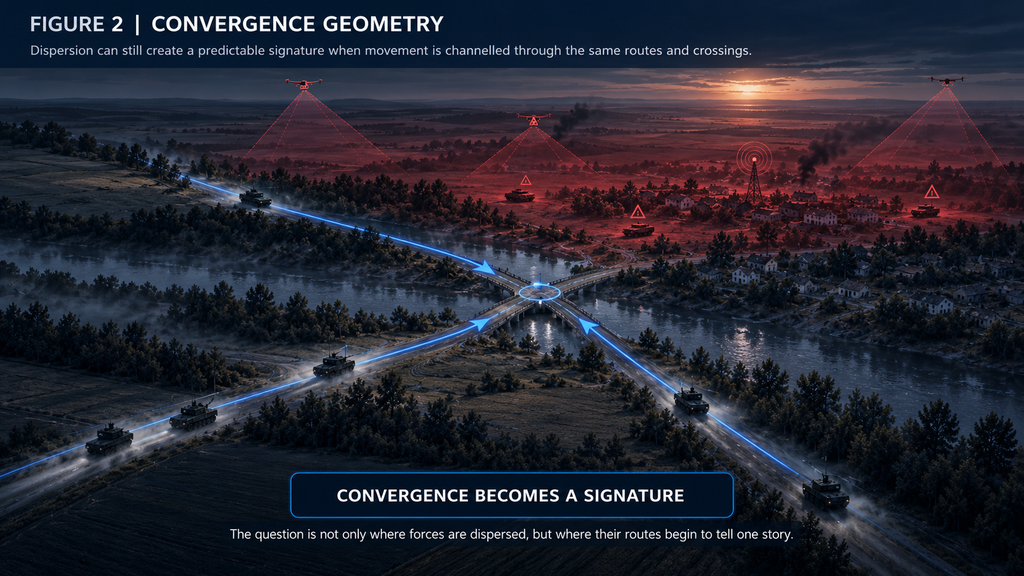
Modern forces face a fundamental contradiction: concentration remains necessary to generate decisive combat power, but concentration increasingly exposes a force to detection and precision attack. Assembling at the Point of Decision examines how brigades can resolve this problem by preparing while dispersed, synchronising capabilities across distance, converging during movement, concentrating only long enough to achieve the required effect, and dispersing again before the enemy can respond. Using an extended fictionalised vignette based on operational conditions in the Lyman direction of Ukraine, the paper explores the influence of terrain, weather, day and night, enemy adaptation, logistics, command latency and the race between friendly convergence and enemy recognition. It also considers how these lessons change when transferred from Ukraine’s open and semi-open terrain to the dense jungles of Southeast Asia. The central conclusion is simple: the lesson is portable, but the method is not. Future forces must learn to mass effects without remaining physically massed.