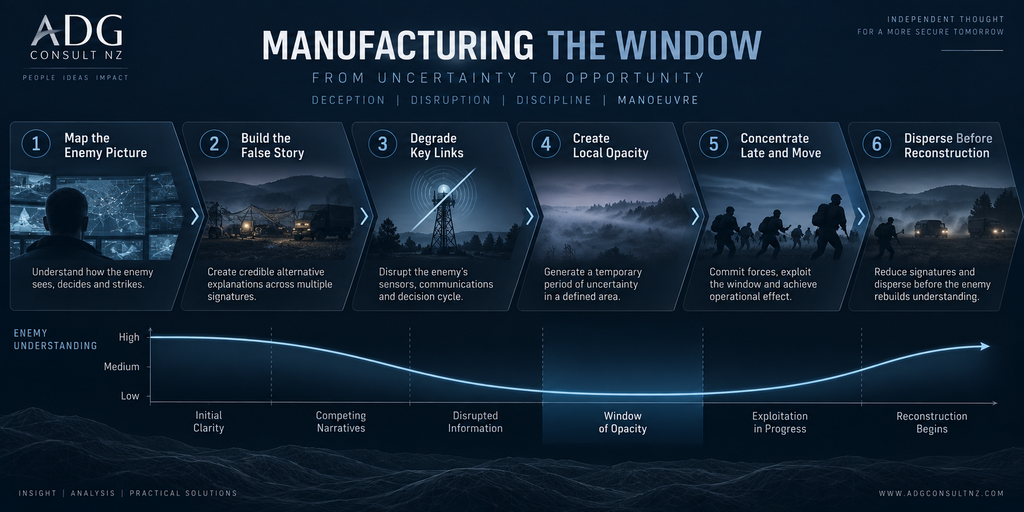
Persistent surveillance, unmanned systems and increasingly rapid sensor-to-shooter cycles have made manoeuvre far more difficult on the modern battlefield. This follow-on Insight Paper examines how forces can deliberately create temporary local “windows of opacity” by combining counter-reconnaissance, electronic warfare, deception, signature management, terrain exploitation, timing and late concentration. Using a fictionalised southern Ukrainian operational vignette, the paper shows how brigade, battalion, company, platoon and individual actions can collectively slow enemy understanding long enough to restore surprise, concentration and freedom of manoeuvre. The central conclusion is that manoeuvre remains viable when a force can make the enemy’s reconstruction time longer than its own period of vulnerable exposure.